
A vacation home should feel different from everyday life—but that doesn’t mean it should feel less personal.
The best vacation homes today are moving beyond the idea of a beautifully decorated escape that is visited a few times a year. They are becoming highly considered extensions of the way their owners actually live: places for long weekends that stretch into weeks, spontaneous visits from friends, dinners that migrate outdoors, sandy feet, wet swimsuits, morning coffee with a view, and rooms that need to work just as beautifully for two people as they do for a full house.
At Andrea Schumacher Interiors, we approach these homes with the same level of detail as a primary residence, but with a slightly different question in mind: How do you want to feel when you arrive?
Two recent projects—one in Boca Grande, Florida, and another along California’s extraordinary Hollister Ranch coastline near Santa Barbara—offer two very different answers.
A New Kind of Luxury Vacation Home
For years, the language around luxury interiors often centered on formality, precious materials, and rooms designed to impress. Increasingly, luxury is being defined by something more personal: ease.
A beautifully designed vacation home still needs exceptional craftsmanship, thoughtful space planning, custom furnishings, and memorable details. But it also needs to accommodate the realities of life away from home.
That might mean a kitchen large enough for everyone to gather around the island, generous seating that encourages people to settle in rather than perch, fabrics and finishes that can handle active families, or outdoor spaces treated with the same attention as the interiors. Even the broader design conversation is shifting toward this kind of lifestyle-driven luxury, with comfort, functionality, thoughtful storage, and spaces that genuinely make daily life easier taking precedence over conspicuous displays of luxury.
For our clients, that means designing a second home that never feels secondary.
Vacation Homes Should Be Designed Around Rituals
When we begin a residential project at Andrea Schumacher Interiors, we spend a great deal of time understanding not simply how our clients want a home to look, but how they intend to use it.
That becomes even more important in a vacation home.
Where does everyone end up at 5 p.m.?
Do guests congregate in the kitchen while dinner is being prepared?
Does someone surf before breakfast?
Is the house regularly filled with children and friends?
Do cocktails happen on the roof?
Does the living room need to accommodate ten people without feeling cavernous when only two are home?
Where do wet towels go?
Where do surfboards live?
Where do you want to watch the sunset?
Those questions ultimately shape the architecture, furniture plans, materials and even the smallest decorative details.
Andrea Schumacher Interiors’ residential work begins with concept development and space planning and continues through design development, pricing, delivery and installation—a process particularly valuable when a home involves major architectural changes or needs to function very differently from its original configuration.
Reinventing a Beach House in Boca Grande, Florida
On Florida’s Gulf Coast, the village of Boca Grande occupies Gasparilla Island, a place with a long connection to fishing, boating, and seasonal life by the water. By the early twentieth century, the island had become renowned for tarpon fishing, while its historic lighthouse dates to 1890.
For longtime Andrea Schumacher Interiors clients, Boca Grande offered the setting for an ambitious vacation home renovation just one block from the beach.
Rather than simply renovating their existing condominium, the clients purchased the neighboring residence and absorbed it into their own, beginning a years-long demolition and redesign process that allowed the home to be reconsidered on a completely different scale.
That kind of transformation is where vacation-home design becomes especially interesting. More square footage isn’t valuable simply because it creates larger rooms. It creates the opportunity to rethink how the house functions when everyone arrives at once.
The resulting interiors embrace Florida without becoming a caricature of Florida.
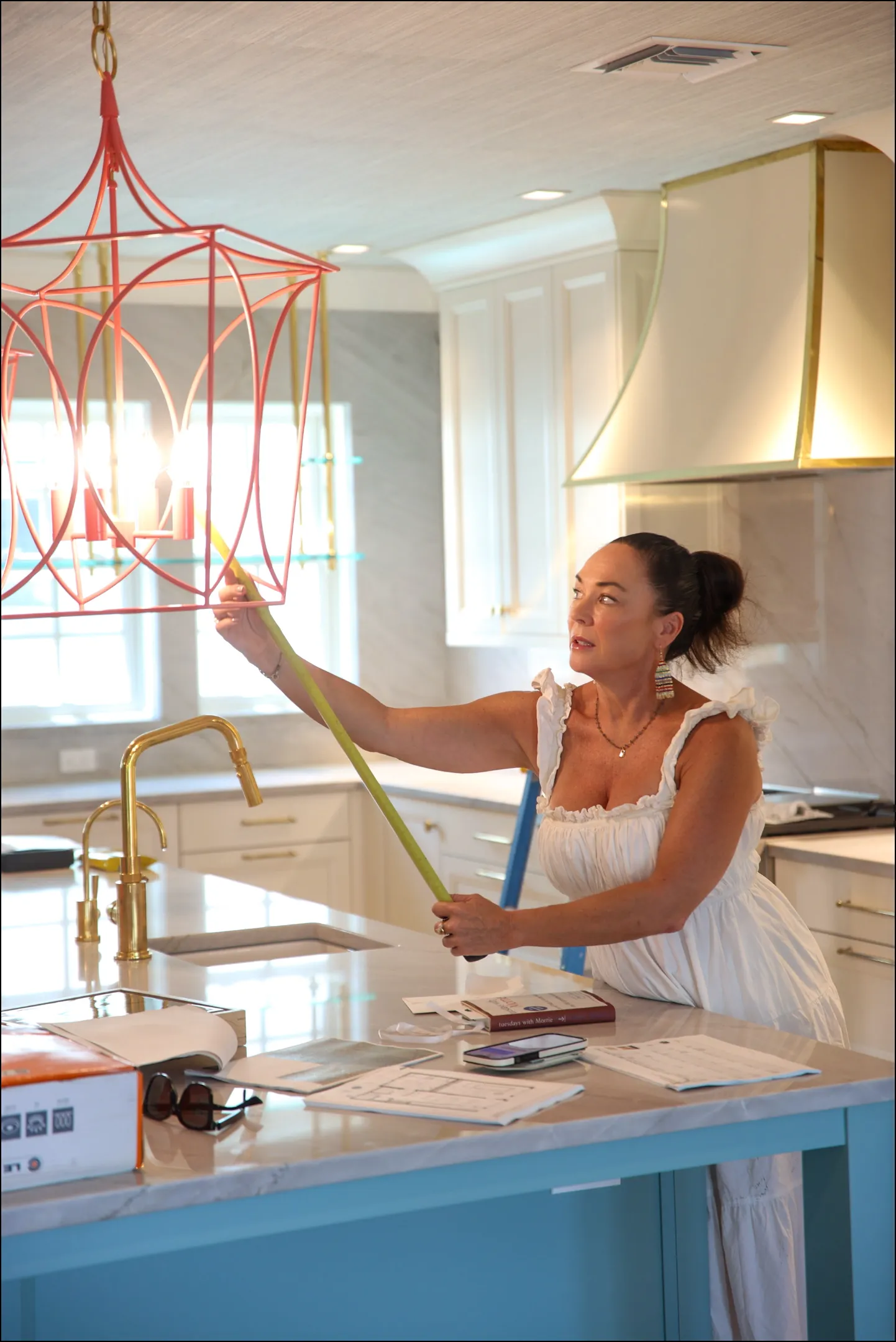
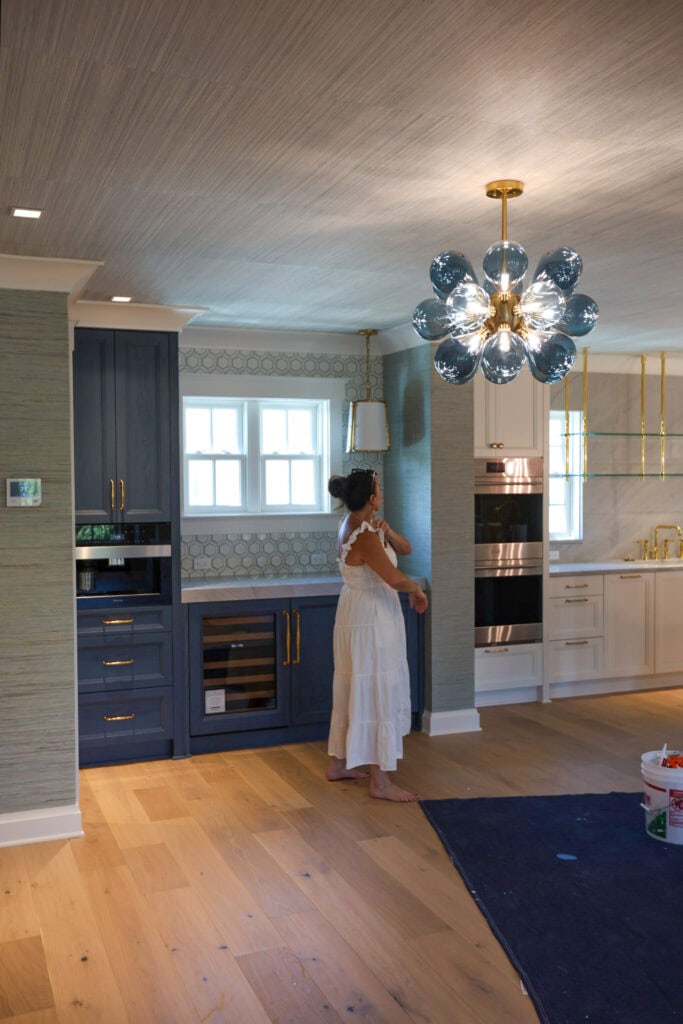
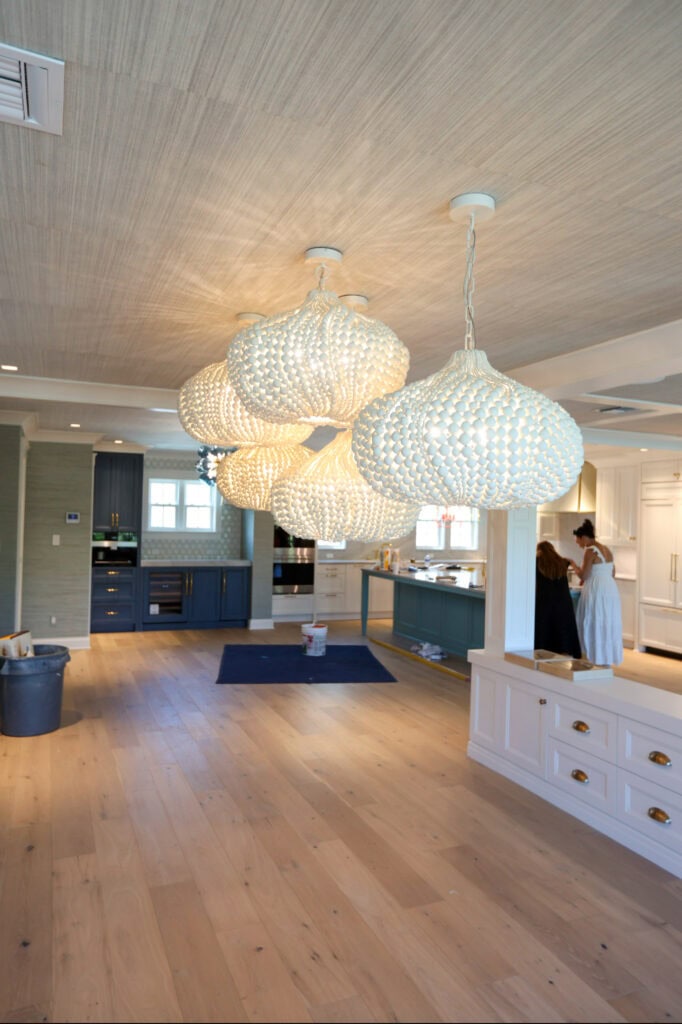
Blue cabinetry, woven textures, grasscloth, natural materials, warm metals and expressive lighting establish a coastal vocabulary, but there is no reliance on predictable nautical décor. Instead, the connection to place comes through material, color and atmosphere.
That is an important distinction in contemporary coastal interior design. The strongest beach homes today tend to take their cues from nature—light, vegetation, water, natural fibers and tactile materials—rather than filling rooms with literal seaside motifs.
The Boca Grande home does exactly that.
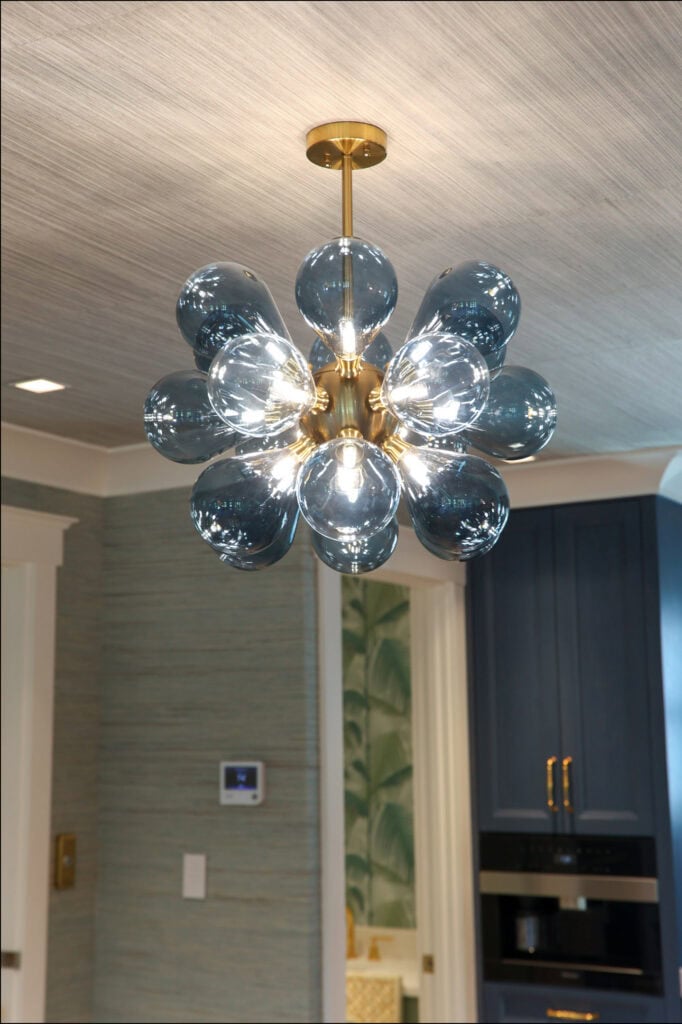
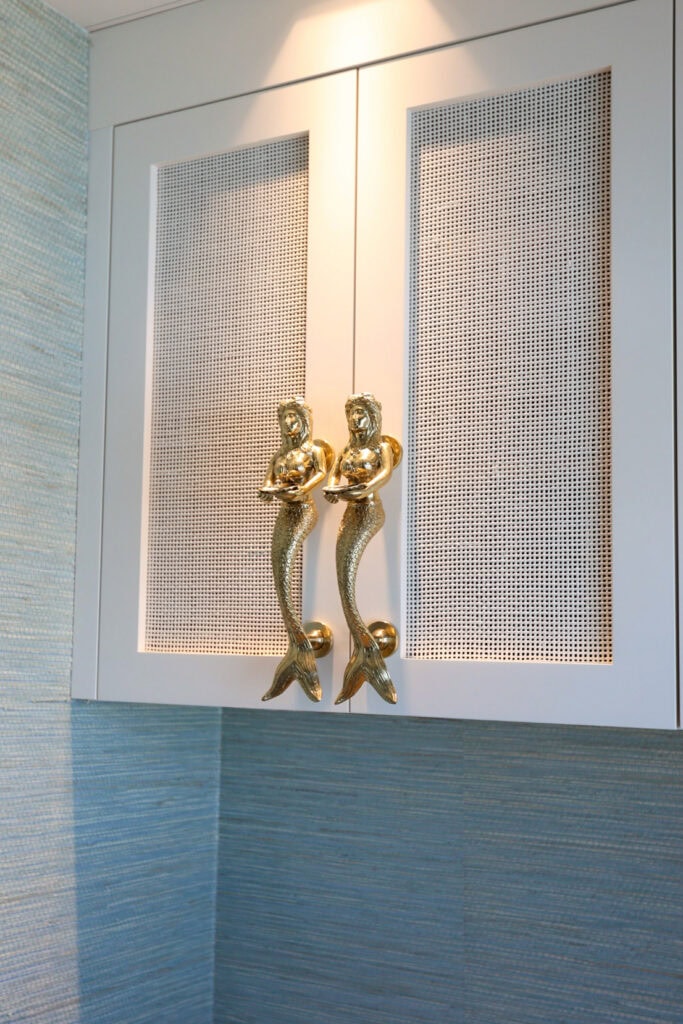
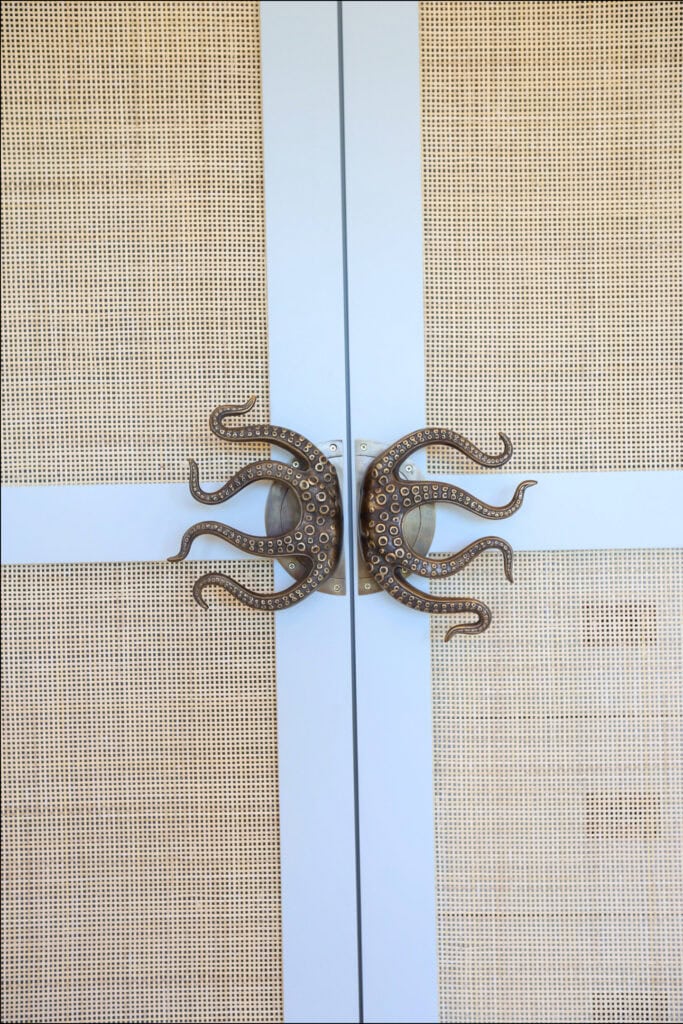
A sculptural cluster of pendants commands attention overhead. Elsewhere, smoky glass lighting adds another layer of color. A woven fixture introduces a relaxed, handmade quality. Brass mermaids and octopus hardware offer moments of humor and fantasy—the kind of detail that reminds you this is a place where the rules can loosen a little.
That balance is important. Vacation homes can tolerate more playfulness.
They are often where clients feel comfortable experimenting with the turquoise cabinet, the whimsical hardware or the light fixture that might have felt too exuberant somewhere else.
Designing the Vacation Home Beyond the Front Door
And then there is the roof.
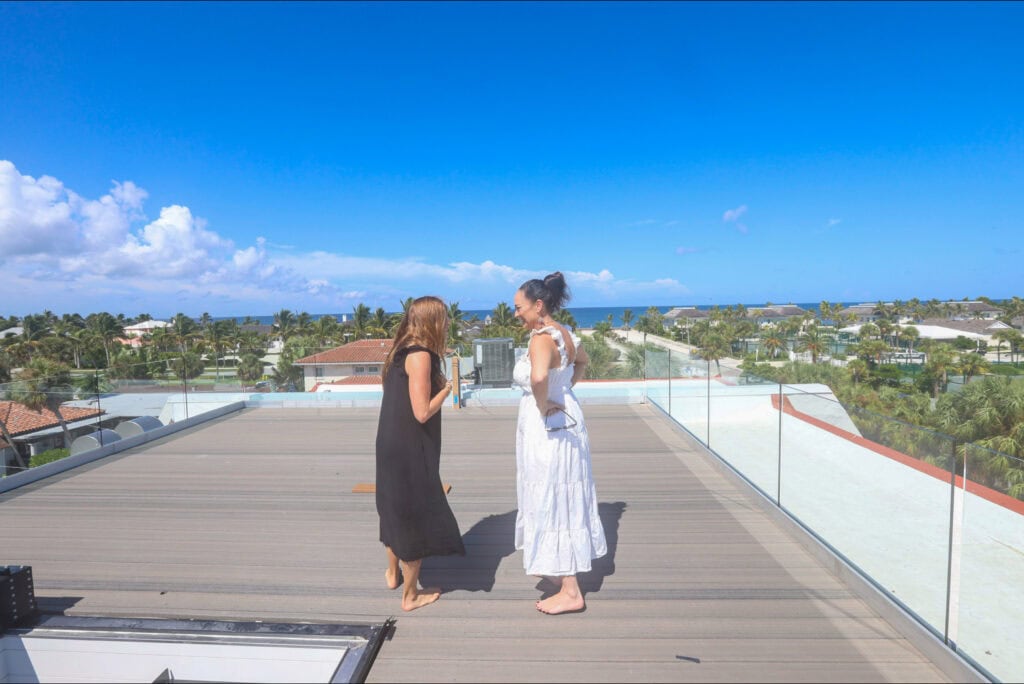
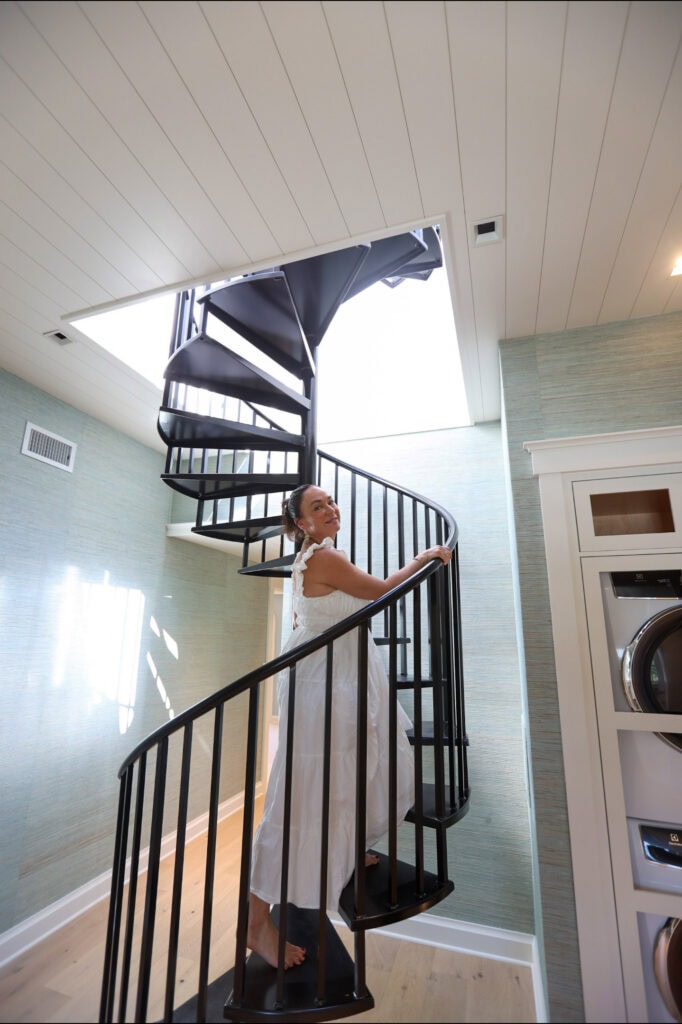
During a recent Boca Grande installation visit, Andrea and the client climbed the spiral staircase to survey the rooftop and its views toward the water.
It is still a work in progress, but that image says a great deal about how we think about modern vacation homes.
The project doesn’t stop where the air conditioning does.
The rooftop is being considered as another room: a place for fabulous outdoor furniture, more seating, a fire pit, conversation and evenings outside. Creating distinct exterior zones for lounging, dining and gathering is increasingly central to luxury outdoor design because it allows the exterior to function with the same intentionality as the rooms indoors.
In Boca Grande, where Gulf Coast architecture has long responded to the climate with verandas, openings and layouts designed to capture breezes, that indoor-outdoor relationship is particularly natural.
The goal isn’t simply to have an outdoor area.
It is to make the outdoors somewhere you actually live.
A Surf Retreat at Hollister Ranch, Santa Barbara
Across the country, another ASI vacation home responds to the coast in an entirely different way.
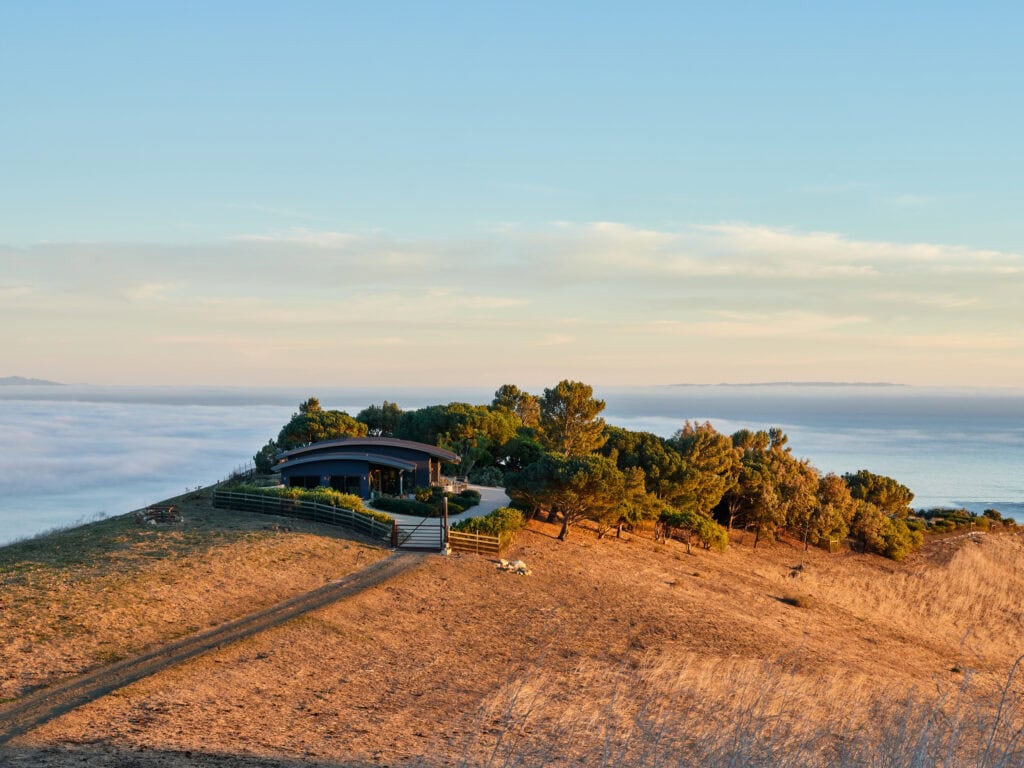
West of Santa Barbara lies Hollister Ranch, one of the most remarkable stretches of the California coastline. The private landholding encompasses roughly 14,400 acres, divided primarily into 100-acre parcels, with much of its landscape remaining undeveloped. Its history stretches from the Chumash people through Spanish-era ranching and the Hollister family, while cattle ranching remains part of the property today.
Along its southern edge are approximately 8.5 miles of coastline. Public access to that shoreline has also been the subject of a decades-long and still-evolving debate in California, underscoring just how unusual and protected this stretch of coast remains.
For surfers, however, Hollister Ranch has an almost mythic reputation. Its reef and point breaks have been documented since the 1960s, and the coastline includes storied surf spots such as Cojo Point, Drakes and Government Point.
Our clients come here for exactly that relationship to the ocean.
They are also longtime ASI clients, and their Hollister Ranch home was conceived as a true California retreat: sophisticated enough to feel special, relaxed enough to return to after a morning in the water.
Santa Barbara Interior Design Inspired by the Landscape
If Boca Grande expresses coastal living through brightness, whimsy and tropical references, Hollister Ranch takes its palette from a completely different landscape.
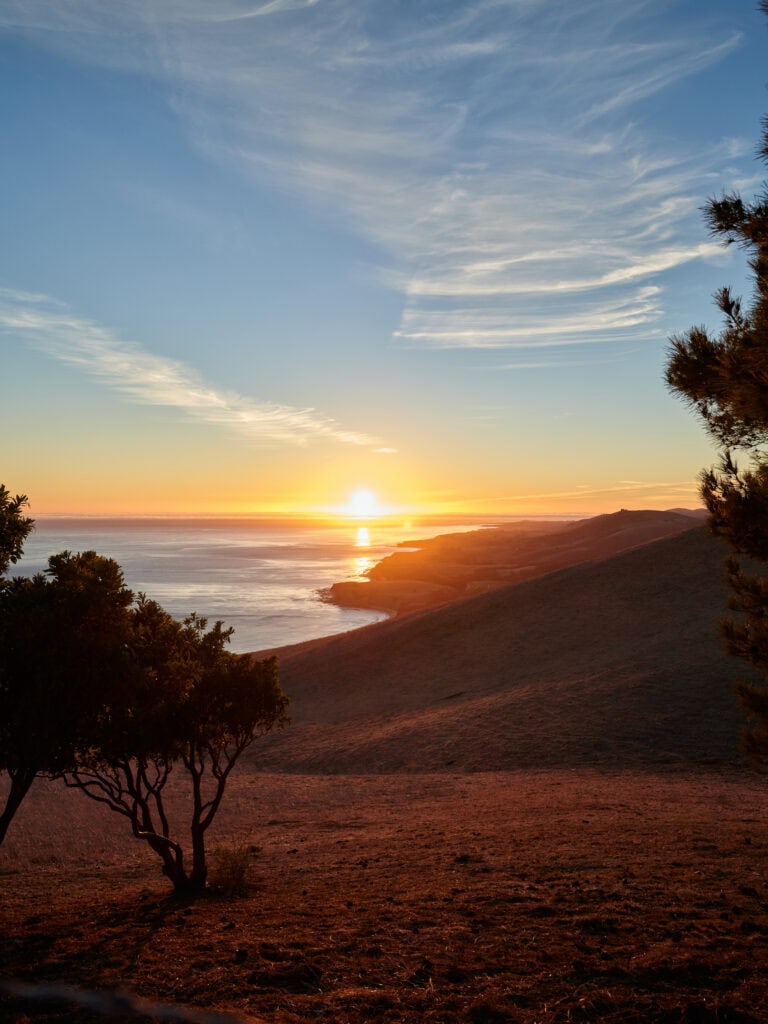
Here, tawny grasses meet blue-green water. Rugged hills fall toward the Pacific. Warm California light moves through the rooms from morning until sunset.
Inside, we translated that environment through layers of sand, oatmeal, cream, weathered wood, muted blue and aquatic green.
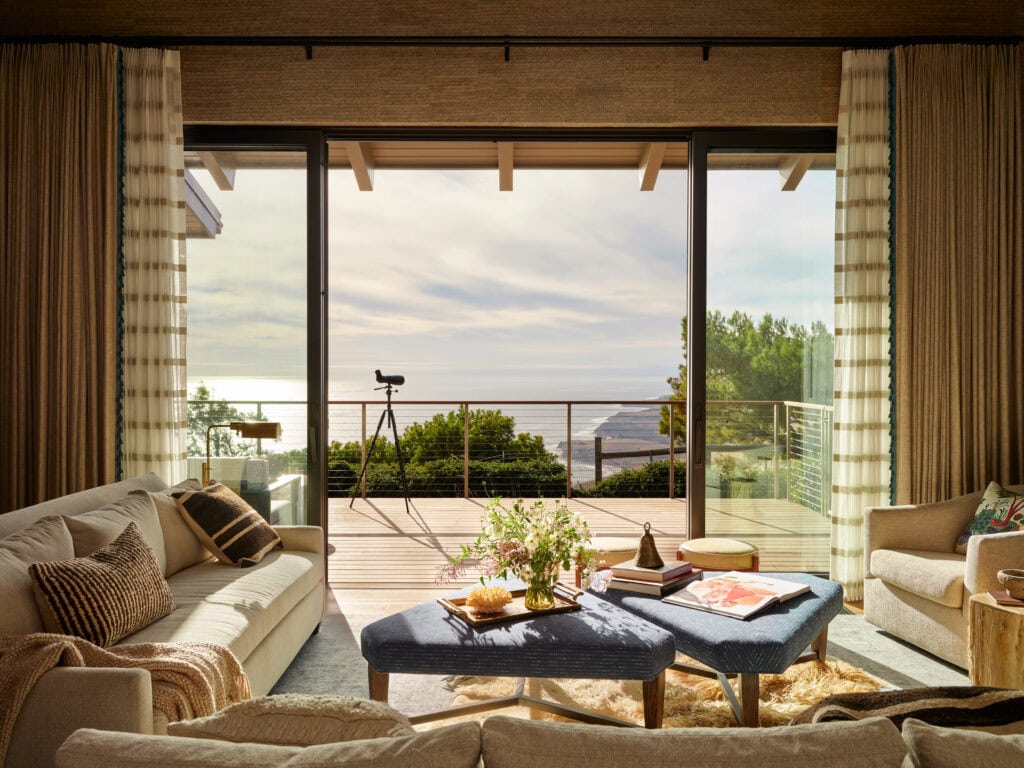
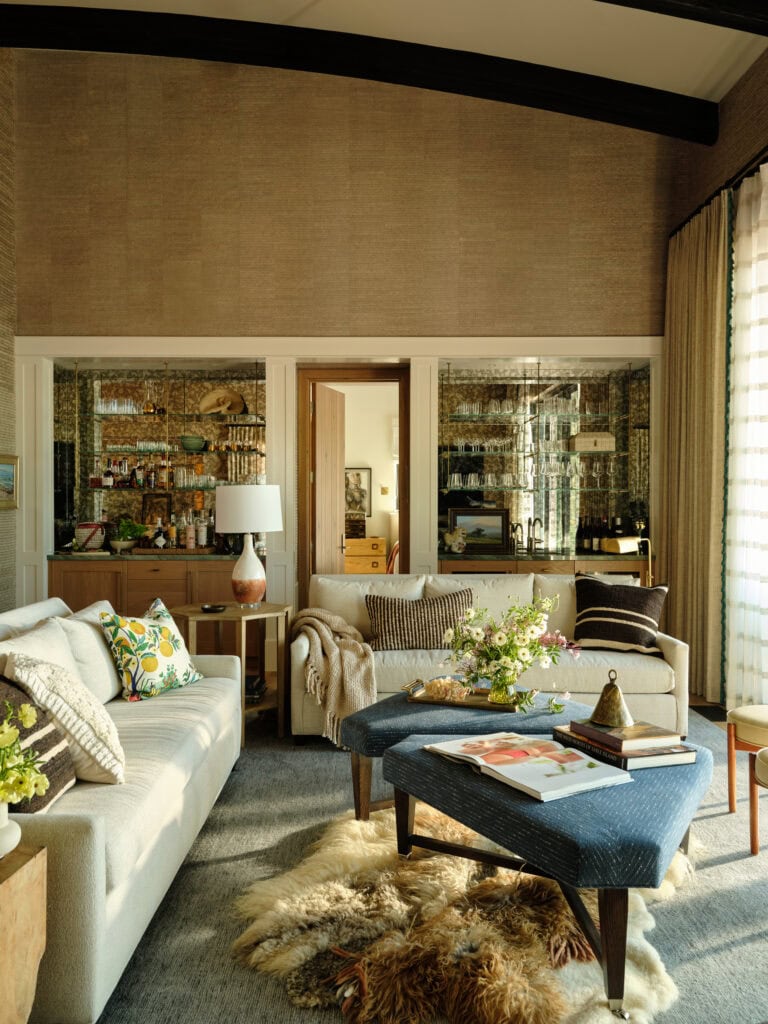
The great room is wrapped in richly textured natural wallcovering that gives the expansive architecture an immediate warmth. Dark ceiling beams bring definition overhead while pale upholstered seating keeps the room easy and inviting.
Rather than arranging the space around a single formal focal point, multiple sofas and movable upholstered tables create a loose gathering area suited to conversation, drinks, books and family life.
And then there is the view.
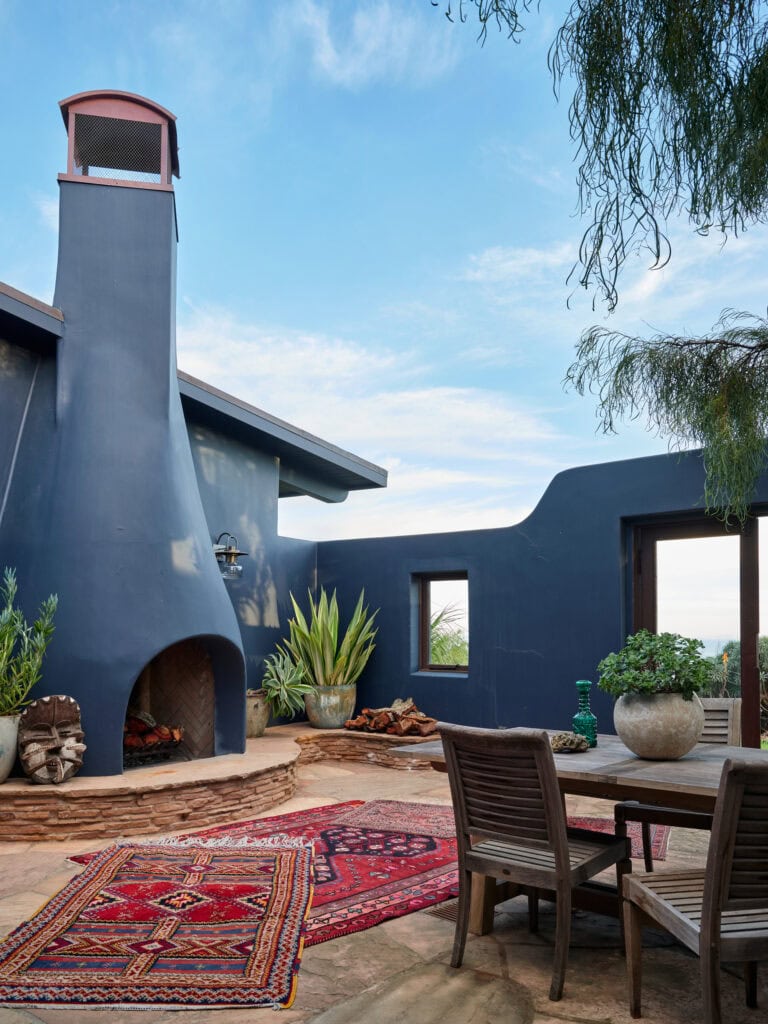
Large glass doors allow the Pacific to become part of the room itself. From one perspective, the interior frames the coastline almost like a landscape painting. Open the doors and that visual relationship becomes physical.
This is indoor-outdoor living in Santa Barbara at its best: not decorating a room to resemble the coast, but allowing the actual landscape to participate in the design.
Coastal Interior Design Without the Coastal Clichés
One of the threads connecting Florida and California is what isn’t present.
Neither project needed anchors, seashells or an abundance of blue-and-white stripes to establish that it is near the ocean.
Instead, the location informs the design more subtly.
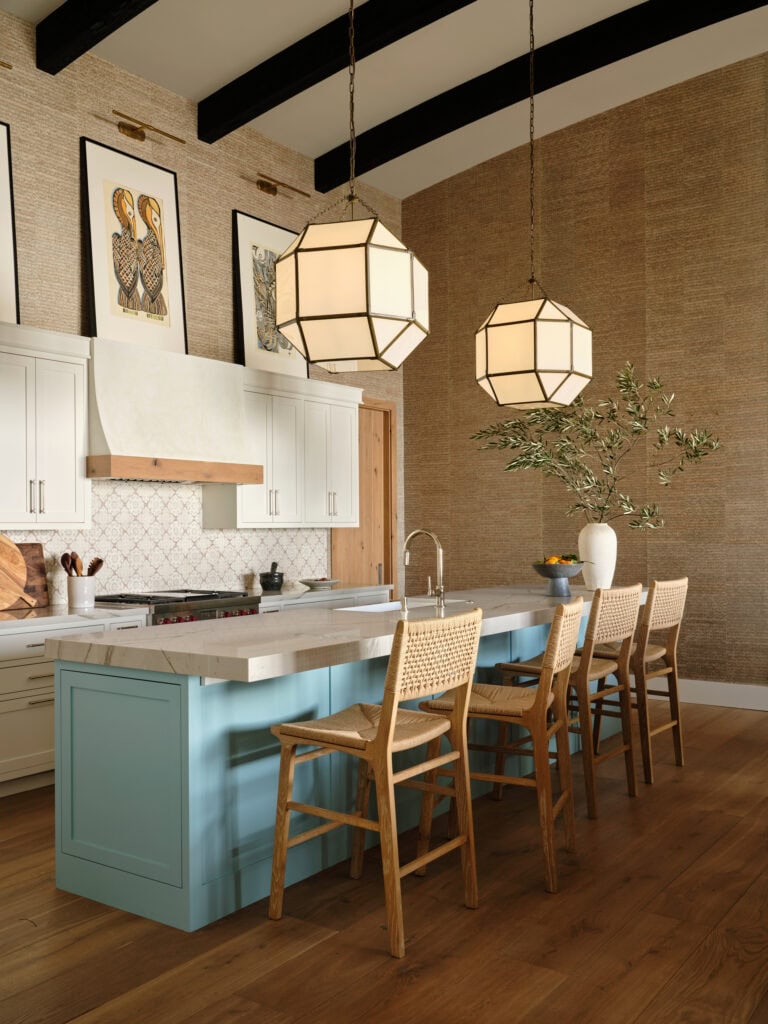
In Hollister Ranch, woven dining chairs and natural woods reflect the surrounding earth. Grasscloth adds movement and imperfection. A blue-green kitchen island pulls a color from somewhere between ocean and sky without overwhelming the room.
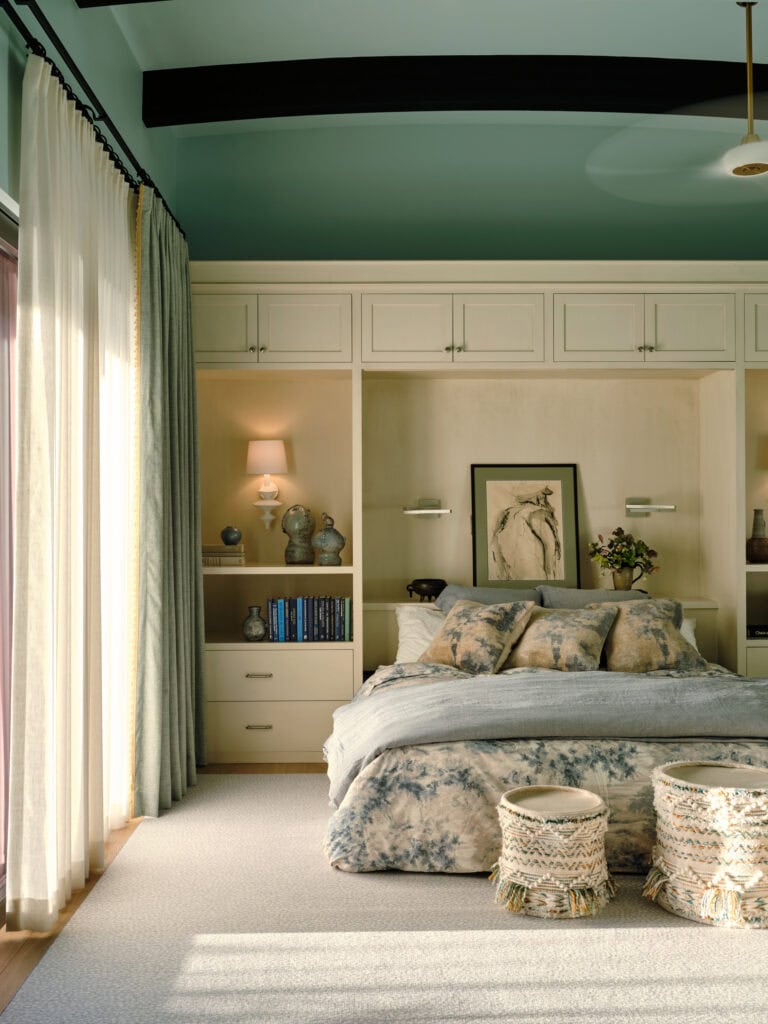
In the bedroom, a soft palette creates quiet while the deep green-blue ceiling introduces an unexpected moment overhead.
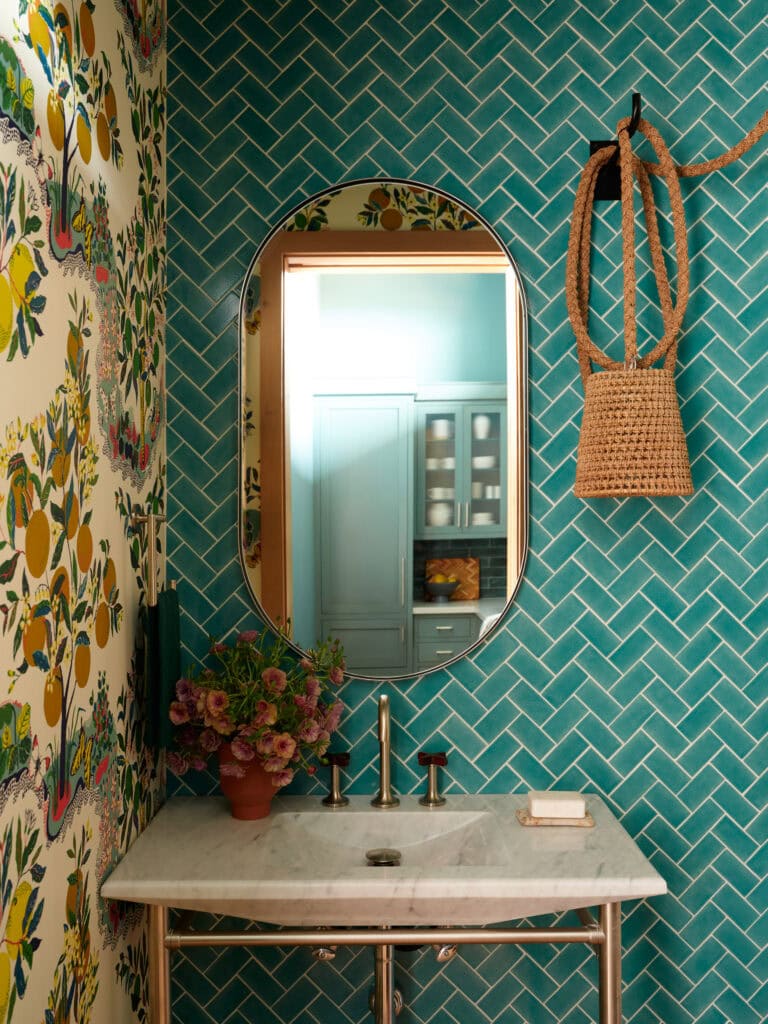
The powder room is allowed to be more exuberant: turquoise herringbone tile meets colorful botanical wallpaper, creating a tiny jewel box that feels completely appropriate for a California surf retreat.
Even practical elements reinforce the lifestyle. A dedicated surfboard storage area is not hidden away as an inconvenience. It is part of the architecture of living here.
That is the difference between designing a generic “beach house” and designing specifically for the people who inhabit one.
Designing a Second Home That Feels Like You
There is one final connection between these two projects that has little to do with geography.
Both belong to longtime clients.
That matters.
The most personal interiors often emerge over time. When we have the opportunity to work with a client again, we already understand something about the objects they respond to, the colors they’re willing to embrace, how they entertain and the way they want their home to feel.
The next project can go deeper.
In Boca Grande, that meant reimagining two residences as one and introducing a sense of Florida exuberance appropriate to a house near the Gulf.
At Hollister Ranch, it meant creating an earthy, layered California coastal home centered around surfing, landscape and connection to the outdoors.
They don’t look alike.
They shouldn’t.
A great vacation home isn’t an interior-design formula replicated in another ZIP code. It should be an expression of place + people + lifestyle.
From the Rocky Mountains to the Pacific Coast
Although these two homes sit beside very different oceans, the principles behind them extend far beyond coastal design.
A Colorado mountain retreat, Florida beach house, Santa Barbara surf home or family vacation property should all begin in the same place: with an understanding of how its owners actually want to spend their time there.
Andrea Schumacher Interiors is a nationally recognized, full-service interior design firm with its headquarters in Denver and a presence in Southern California, designing residences across the United States. The studio’s work ranges from whole-home renovations and new construction to coastal retreats, mountain residences and highly personalized city homes.
Our Denver interior designers and Santa Barbara interior designers approach every project with the belief that luxury doesn’t have to mean formality.
Sometimes luxury is a beautifully upholstered sofa.
Sometimes it’s custom millwork.
Sometimes it’s walking in from the surf barefoot, leaving the doors open to the Pacific and knowing that every inch of the house was designed for exactly that moment.
And perhaps that’s the real New American Vacation Home: not an escape from your life, but a home designed around the part of life you never want to rush.
If you’re thinking about reimagining your home in Denver, Santa Barbara, or beyond, our team at Andrea Schumacher Interiors approaches every project with that same philosophy: bold, layered, and entirely personal.
Explore more of our work here and follow along on Instagram @andreaschumacherinteriors.
To see behind the scenes of our interior design architect projects and more of our design process, follow us on our socials below!